1. The 2026 ADU Resale Premium: What Appraisers and Freddie Mac Actually Value (+25% to +34.9%)
For decades, suburban homeowners hesitated to invest $100,000 to $250,000 into a detached backyard cottage because traditional real estate appraisals often treated outbuildings as cosmetic over-improvements. That dynamic reversed permanently following landmark valuation studies published by Freddie Mac and the Federal Housing Finance Agency (FHFA). Across high-demand metropolitan and suburban markets with pro-ADU zoning legislation (California, Washington, Oregon, Colorado, Texas, and Florida), properties with a fully permitted, independent Backyard ADU now sell for an average 25% to 34.9% price premium over comparable single-family homes on similar lot sizes.
Under current Uniform Standards of Professional Appraisal Practice (USPAP) guidelines and updated Fannie Mae/Freddie Mac appraisal protocols, certified appraisers must separate non-permitted sheds from legally permitted accessory dwellings. When an ADU features a permanent foundation (monolithic slab or frost-footing stem wall), dedicated 240V electrical subpanel, full wet-wall bathroom, and permanent cooking facilities (range, refrigerator, sink), appraisers apply an income-capitalization or paired-sales valuation method. In markets like Austin, Denver, Seattle, and Southern California, a permitted 480 to 800 sq ft casita routinely adds $135,000 to $290,000 in immediate appraised equity, capturing dollar-for-dollar cost recovery upon completion.
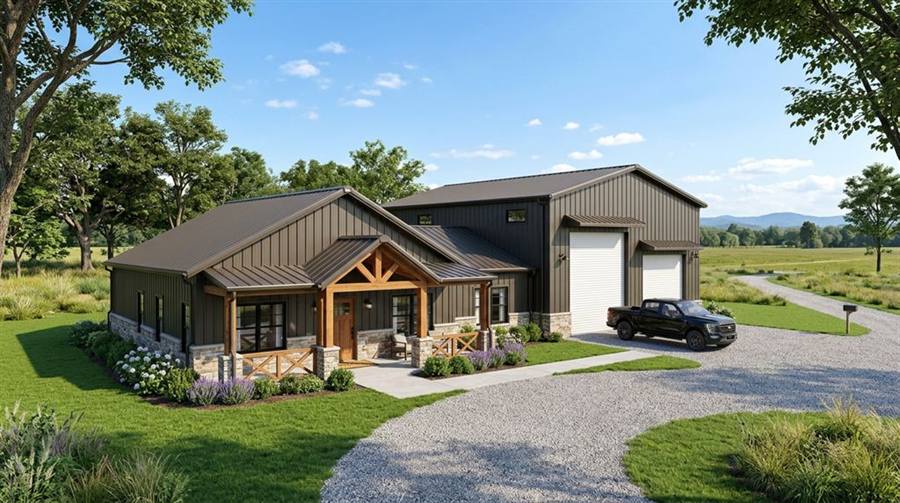
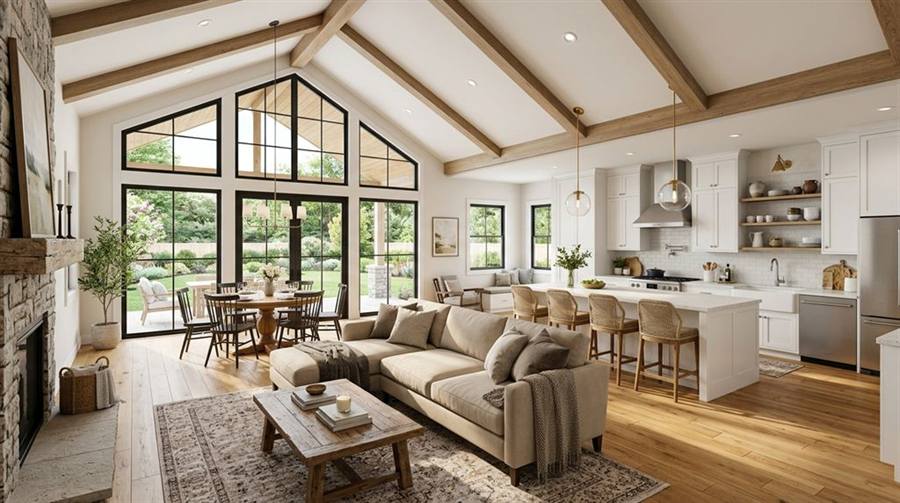
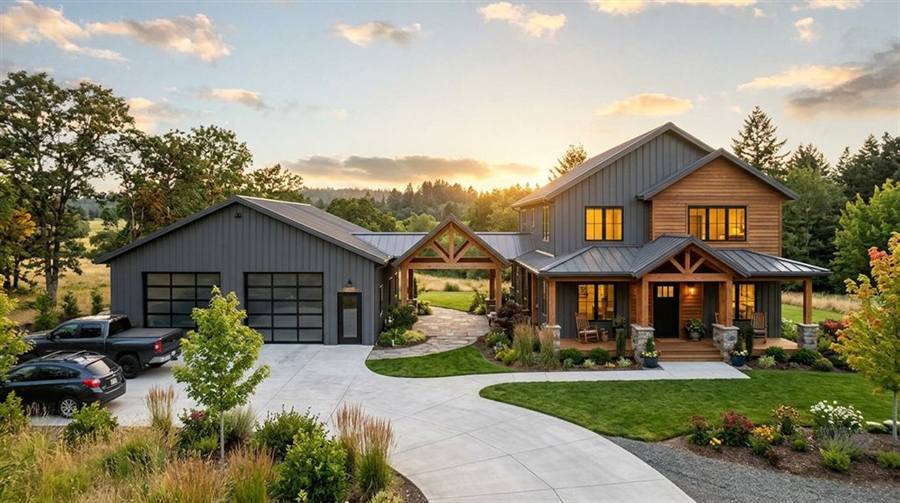
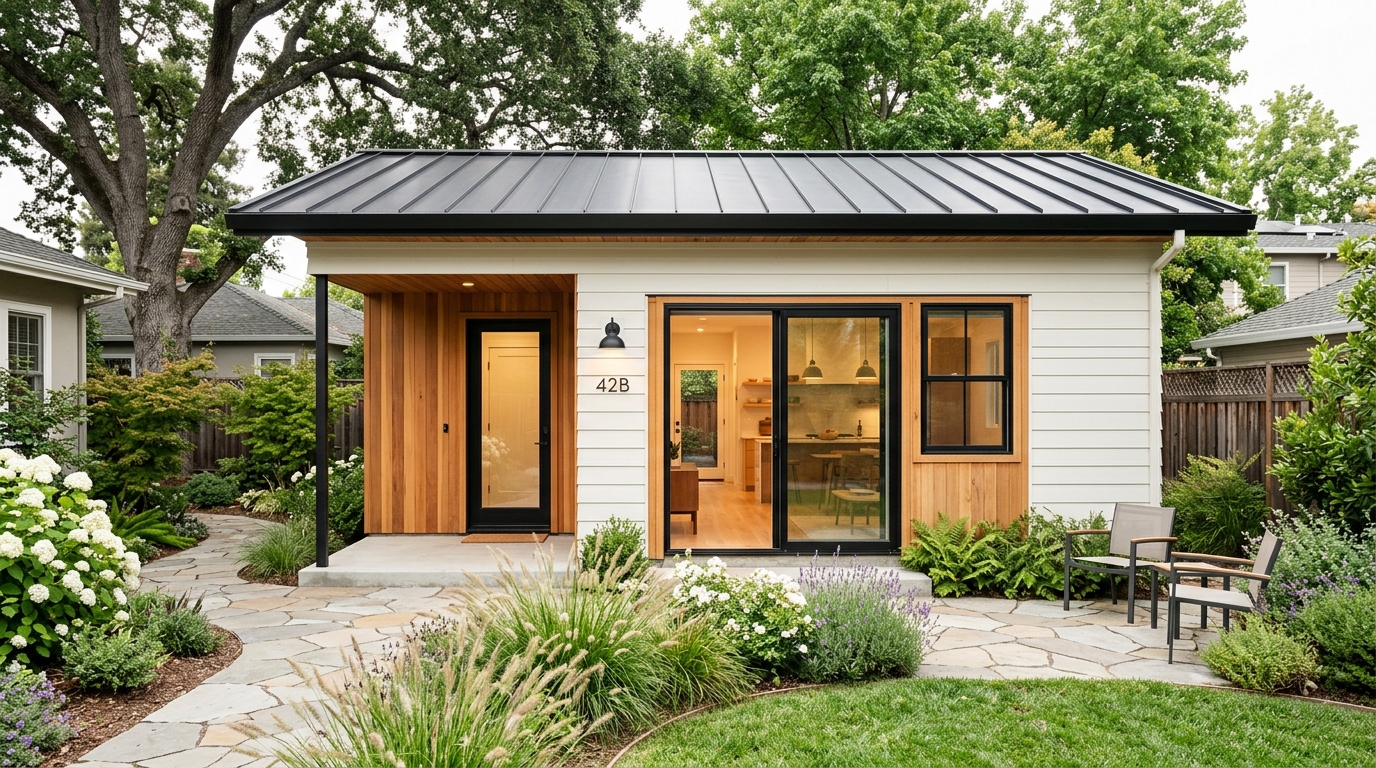
ADU Home Value Increase & Rental ROI Study (2026) — Side-by-Side Visual Comparison
Source: Freddie Mac ADU Valuation Study, HUD ADU Policy Data & HoolieHaus 2026 ADU Cost Dataset.
2. The Fannie Mae & Freddie Mac 75% Rental Income Mortgage Rule: Unlocking Borrowing Power
The single biggest catalyst driving ADU construction volume in 2025–2026 is the expansion of the Fannie Mae HomeReady and Freddie Mac Home Possible underwriting guidelines. Both government-sponsored enterprises (GSEs) now permit mortgage lenders to count up to 75% of projected fair-market ADU rental income toward a borrower’s debt-to-income (DTI) qualification ratio on 1-unit properties—even when the ADU does not yet have a signed lease.
To verify market rent, appraisers complete Fannie Mae Form 1007 (Single-Family Comparable Rent Schedule). For an owner-occupant building a 20x30 (600 sq ft) one-bedroom accessory home commanding $1,850/month in local market rent, the lender credits $1,387.50/month in qualifying income ($1,850 × 0.75). At prevailing interest rates, that monthly rental credit offsets approximately $190,000 to $225,000 in construction loan borrowing capacity—effectively allowing the ADU’s future tenant revenue to finance its own construction loan without straining the homeowner’s primary paycheck.
2026 Detached Backyard ADU Build Cost, Monthly Rent & Appraised Value Gain by Footprint
| ADU Footprint | Heated Sq. Ft. | Layout Config | Turnkey Build Cost (2026) | Avg. Long-Term Rent/Mo | Est. Property Value Added |
|---|---|---|---|---|---|
| 16' × 24' Studio ADU | 384 Sq. Ft. | Studio + 1 Bath + Kitchenette | $82,000 – $128,000 | $1,350 – $1,950/mo | +$110,000 – $165,000 |
| 20' × 24' 1-Bed Cottage | 480 Sq. Ft. | 1 Bed + 1 Bath + Full Kitchen | $105,000 – $158,000 | $1,600 – $2,300/mo | +$135,000 – $205,000 |
| 20' × 30' 1-Bed + Den | 600 Sq. Ft. | 1 Bed + 1 Bath + Laundry Core | $128,000 – $192,000 | $1,850 – $2,650/mo | +$165,000 – $245,000 |
| 24' × 32' 2-Bed Casita | 768 Sq. Ft. | 2 Bed + 1 Bath + Vaulted Living | $156,000 – $234,000 | $2,150 – $3,100/mo | +$195,000 – $290,000 |
| 24' × 36' 2-Bed / 2-Bath | 864 Sq. Ft. | 2 Bed + 2 Bath Split Suite | $174,000 – $262,000 | $2,350 – $3,450/mo | +$220,000 – $325,000 |
Source: Freddie Mac ADU Valuation Study, HUD ADU Policy Data & HoolieHaus 2026 ADU Cost Dataset.
3. Footprint Economics: 16x24 Studio vs. 20x30 1-Bed vs. 24x36 2-Bed Costs & Cap Rates (8.4%–13.8%)
Analyzing 2,062 engineered blueprints in the HoolieHaus catalog reveals that detached accessory dwelling return-on-investment (ROI) is heavily shaped by building footprint aspect ratios and wet-wall plumbing density. Because the homeowner already owns the underlying parcel, ADU construction incurs $0 in land acquisition expenses, driving unlevered cash-on-cash cap rates to between 8.4% and 13.8% annually—more than double the national 4.5%–6.2% cap rates typical of entry-level turnkey single-family rentals.
A compact 16x24 (384 sq ft) studio cottage costs $82,000 to $128,000 turnkey and generates $1,350 to $1,950/month in long-term rent, offering the lowest initial dollar risk. Stepping up to a 20x24 (480 sq ft) or 20x30 (600 sq ft) 1-bedroom footprint costs $105,000 to $192,000 and captures higher tenant retention, commanding $1,600 to $2,650/month. For investors maximizing total rental yield, a 24x32 (768 sq ft) or 24x36 (864 sq ft) 2-bedroom/2-bath layout costs $156,000 to $262,000 but delivers $2,150 to $3,450/month in urban/suburban rent rolls, adding up to $325,000 in equity.
Backyard ADU Lot Setback, Max Footprint & Rental Cash-Flow ROI Calculator
Verify whether a 16×24, 20×30, or 24×36 detached ADU fits your rear yard setback rules and calculate projected monthly rental cash flow, Net Operating Income (NOI), Cap Rate %, and Cash-on-Cash return.
4. Record 17% Multigenerational Living Surge: NAR Data & Aging-in-Place Math
Beyond investor rental income, demographic shifts are supercharging backyard accessory housing demand. According to the National Association of Realtors (NAR) Home Buyers and Sellers Generational Trends report, multigenerational home purchases reached an all-time record 17% of all U.S. residential transactions (surging to 21% among Gen X buyers aged 44 to 58). When surveyed by NAR researchers, 36% of multigenerational buyers identified cost savings, pooled household income, and caring for aging parents as the primary motivator.
With private assisted-living memory care facilities averaging $4,800 to $7,500+ per month ($57,600 to $90,000 annually), building a dedicated Single-Story Ranch or zero-threshold ADU granny flat on a concrete slab pays for itself in under 30 months compared to third-party senior housing costs. Parents preserve dignified autonomy and privacy in their own independent dwelling, while adult children provide immediate physical support next door.
5. Avoiding the 3 Costly Zoning & Utility Traps (Sewer Fall, Setback Egress & Submeters)
While state legislative reforms have dismantled minimum lot sizes and parking mandates, three site-engineering bottlenecks still account for 75% of unexpected ADU change orders: (1) **Sewer Lateral Slope**: Gravity sewer lines require a continuous downward pitch of 1/4 inch per foot (2% grade). If the rear backyard elevation sits lower than the street sewer main invert, builders must budget $4,500 to $8,500 for a sealed sewage ejector pump basin. (2) **Fire Separation Setbacks**: Under IRC Section R302.1, exterior walls set less than 5 feet from side or rear property lot lines require 1-hour fire-rated 5/8-inch Type-X gypsum construction and restricted window openings. (3) **Electrical Submetering**: Adding an all-electric ADU with heat pumps, induction cooking, and EV charging requires verifying the main home’s electrical service; 200A service is often maxed out, necessitating a 100A subpanel feeder or a 400A service split.
Before finalizing construction bids, test your lot setbacks, building dimensions, and regional rental rate assumptions using our free ADU Lot Setback & Rental ROI Calculator to model exact payback timelines and net operating cash flow.
6. Shop-to-Home Mudroom & Pet Wash Station Planning
When adding an attached or detached accessory dwelling that shares space with a garage or hobby workshop, separating dirt, gear, and pet messes before entering the pristine living quarters is essential. Use our free Shop-to-Home Mudroom & Dog Wash Layout Planner to model elevated pet wash stations, curb heights, stackable laundry clearances, and negative pressure exhaust ventilation.