The Rural Land Feasibility Gate: Why Soil & Utilities Determine Building Viability
Unimproved rural acreage offers spectacular freedom for large residential footprints like a 30x40 barndominium or a 40x60 shop house. However, the purchase price per acre represents only the beginning of your site investment. Without municipal water, sanitary sewer, and three-phase power lines at the road frontage, site infrastructure (well, septic, electric run, driveway gravel) frequently totals $35,000 to $70,000 before pouring a single yard of concrete.
The single most critical contingency in any rural land purchase contract is a soil percolation ('perc') test and environmental health septic site evaluation. A parcel of land that cannot pass a perc test or support an approved on-site sewage disposal system cannot be legally permitted for a permanent dwelling.
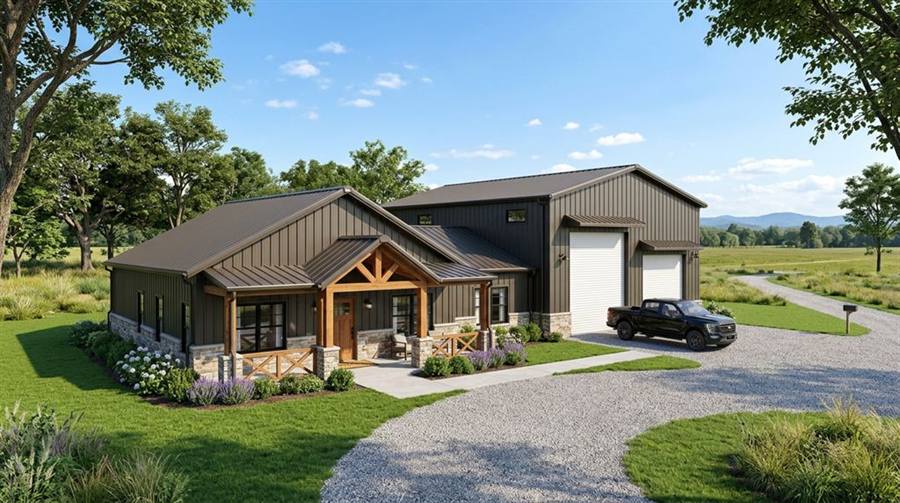
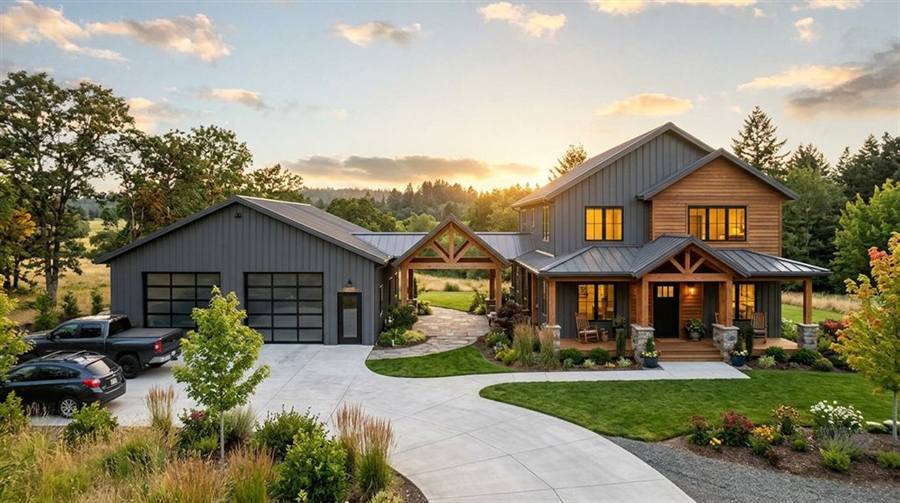
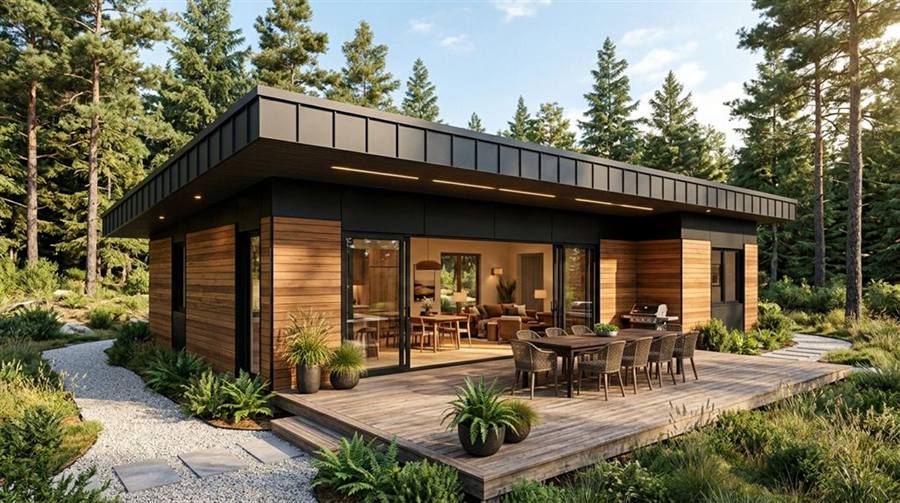
Rural Land Perc Tests, Septic & Well Costs — Side-by-Side Visual Comparison
Source: HoolieHaus 2026 Rural Land & Sitework Cost Study.
The Soil Perc Test Procedure: Minutes-Per-Inch & Hydraulic Conductivity
A soil perc test measures the rate at which saturated soil absorbs liquid. A licensed septic contractor or county soil scientist excavates 2 to 4 test holes (typically 6 to 8 inches in diameter and 24 to 36 inches deep) within the proposed drainfield reserve area.
The test holes are presoaked with water for 4 to 24 hours to simulate wet seasonal conditions. The tester then measures the drop in water level over designated 30-minute intervals to calculate the percolation rate in minutes per inch (MPI):
• Fast Perc (< 5 to 15 MPI): Sandy or gravelly soil. Excellent drainage, but extremely rapid rates may require supplemental filtration sand to protect groundwater tables.
• Ideal Perc (15 to 45 MPI): Loam or silt-loam. Standard gravel trench or gravelless chamber septic systems function with minimal footprint.
• Slow Perc (45 to 60 MPI): Heavy clay loam. Requires an enlarged leach field footprint to disperse effluent without surfacing.
• Failing Perc (> 60 MPI): Dense impervious clay or bedrock. Standard gravity drainfields fail. Requires an engineered alternative system such as a raised sand mound, aerobic treatment unit (ATU), or drip dispersal system ($16,000–$28,000+).
2026 Raw Land Infrastructure & Utility Development Cost Breakdown (1 to 10 Acre Rural Parcel)
| Sitework & Utility Phase | Favorable Soil / Close Setback | Challenging Soil / Long Setback | Key Cost Driver |
|---|---|---|---|
| Soil Perc Test & Septic Engineering | $850 – $1,600 | $2,200 – $4,500 | County sanitarian vs. licensed PE hydrogeologist |
| Septic System Installation (3–4 Bed) | $7,800 – $12,800 (Gravity) | $18,500 – $32,000 (Mound/ATU) | Soil perc rate (6–30 MPI vs. >60 MPI clay) |
| Private Water Well + Submersible Pump | $9,500 – $14,500 (150' Depth) | $18,000 – $34,000 (350'+ Depth) | Bedrock depth & static water level GPM |
| Gravel Driveway + Culvert (200 LF) | $4,800 – $8,200 | $11,500 – $22,000 (500+ LF) | Geotextile fabric + 8" compacted #3/#57 stone |
| 200A–400A Electric Primary Extension | $2,500 – $6,500 (<200' overhead) | $12,000 – $28,000 (Underground) | Co-op free footage allowance vs. $/LF trench |
| TOTAL RAW LAND INFRASTRUCTURE | $25,450 – $43,600 | $62,200 – $120,500 | Must be budgeted before buying rural acreage |
Source: HoolieHaus 2026 Rural Land & Sitework Cost Study.
Conventional Gravity vs. Engineered Mound Septic Systems: Cost Breakdown
Septic system sizing under state environmental codes is governed primarily by the number of bedrooms (which determines daily wastewater design flow, typically 120 to 150 gallons per day per bedroom) rather than total square footage. A 3-bedroom, 2-bath layout like our 30x40 pole barn home typically requires a 1,000-gallon two-compartment concrete septic tank and 300 to 500 linear feet of absorption trench.
Conventional Gravity System ($7,500 – $12,500): Suitable for well-drained soils with seasonal high water table > 36–48 inches below the trench bottom. Utilizes a precast concrete or poly tank, gravity distribution box, and perforated pipes bedded in washed river gravel or plastic arch chambers.
Engineered Mound or Pressure Dosed System ($14,000 – $24,000): Required when tight clay, shallow bedrock, or high water tables exist within 2 to 3 feet of the surface. Wastewater flows into a pump dosing chamber where an effluent pump distributes pressurized pulses into an elevated sandy loam mound constructed above grade.
Private Water Well Drilling: Depth, Casing & Water System Economics
Private residential water wells are drilled through overburden soil down into water-bearing rock or gravel aquifers. Drilling costs are priced by the linear vertical foot, typically averaging $35 to $65 per foot for 6-inch steel or heavy PVC casing, plus drilling labor, drive shoes, and sanitary seal grouting.
In addition to the drilled hole, the complete well system requires:
• Submersible Deep-Well Pump & Wiring (1/2 HP to 1.5 HP): $1,800 – $3,200
• Sanitary Well Head & Pitless Adapter: $650 – $1,100
• Underground Trenching & Water Supply Pipe to House Slab: $8 – $14 per linear foot
• Indoor Diaphragm Pressure Tank (44 to 86 gallons) & Pressure Switch: $900 – $1,600
• Whole-Home Filtration & Water Softener (Iron/Hardness): $1,200 – $3,500
At an average depth of 150 to 300 feet, total turnkey well system installation typically ranges from $9,000 to $18,500.
Critical Separation Setback Distances: Protecting Your Water Supply
Local environmental health departments enforce strict horizontal separation setbacks between on-site features to protect potable water from contamination. Before finalizing your building footprint and driveway orientation, verify these minimum distances:
• Private Well to Septic Tank: Minimum 50 feet
• Private Well to Septic Leach Field: Minimum 100 feet (150 feet in fractured rock or uphill)
• Septic Leach Field to Building Foundation: Minimum 10 to 20 feet
• Septic Leach Field to Property Line: Minimum 10 to 15 feet
• Septic Leach Field to Surface Water / Creeks: Minimum 50 to 100 feet
Always maintain an unencumbered 100% replacement drainfield reserve area that cannot be paved, driven on, or built over with outbuildings.
State & EPA On-Site Wastewater Regulations
For technical standards on soil evaluation and on-site treatment, consult theEPA Onsite Wastewater Treatment Systems Manualand your local county environmental health department.